
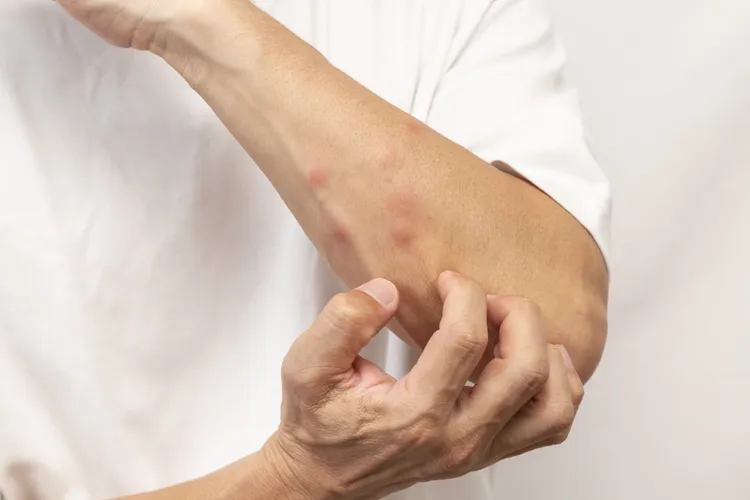

During the warmer months, you may notice a few bug bites here and there if you’re spending a lot of time outdoors. Scratching them may be your first instinct, but it can actually make things worse.
To find out why—and what to do instead—we spoke with Michele Green, MD, a board-certified cosmetic dermatologist based in New York.
*This interview has been edited and condensed for length and clarity.
Question: Why do bug bites itch, and why does scratching make them worse?
Green: The itch comes down to your immune system reacting to proteins in insect saliva. When a mosquito or other biting insect punctures the skin, it injects saliva that your body flags as foreign. As a result, your immune system is activated and a chemical called histamine is released.
This causes local vasodilation and fluid buildup, which is why a bite swells into a raised, red bump. Interestingly, a bug’s first bite on you might not itch at all, since your body “learns” to react to that particular saliva over time. Some people stay itchy every time, while others build up a bit of tolerance.
Your first instinct is to scratch a bug bite for relief, but it may do more harm than good. It triggers your skin to release more of the same chemicals that caused the itch in the first place, leaving you itchier than before.
On top of that, scratching physically irritates and damages the skin, exacerbating inflammation and, if it breaks the skin, making it more prone to infection.
Scratching the bite also mobilizes saliva and encourages more histamine release, which causes the itching in the first place. This is often called the “itch-scratch cycle,” in which the more you scratch, the more you want to scratch, and the longer everything takes to heal.
Q: So, what should you do instead?
Green: There are many ways to safely calm an itchy bug bite without scratching.
Applying pressure with a cold, damp cloth or an ice pack can temporarily numb the itch and reduce swelling. Additionally, doctors often recommend over-the-counter antihistamines such as Benadryl to counteract histamine released by the immune system. Anti-inflammatory medications like ibuprofen can reduce swelling and inflammation.
Similarly, calamine lotion or a dab of hydrocortisone cream work well, too.
Q: When should you seek medical attention for a bug bite?
Green: Most bites are just an annoyance and clear up on their own. But it’s worth getting checked out if you notice increasing redness, warmth, or pain around the bite; pus; red streaks spreading from it; a fever; or swollen nearby glands, since these can be signs of infection.
If there is swelling spreading well beyond the bite, a rash breaking out elsewhere on your body, or any trouble breathing or swallowing, treat that as an emergency and get medical help right away.
