
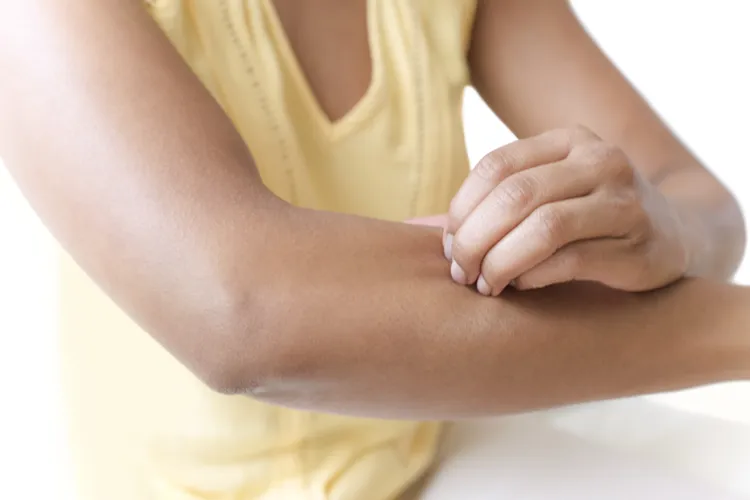

Dehydration can lead to dry, flaky, and itchy skin, among other visible changes. Ensuring you drink enough water daily is crucial for maintaining skin health and overall hydration.
How Dehydration Impacts Your Skin
When you’re not getting enough water, your skin may show several signs, including:123
Dry skin
Flaky skin
Itchiness
Redness
Skin that remains crimped when pinched (decreased skin turgor)
Other Signs of Dehydration
Besides dry, itchy skin, some other symptoms you might notice if you are dehydrated include:45
Headaches
A dry, sticky mouth
Decreased urine output
Hard stools or constipation
Fatigue
Weight gain
Weakness
How Does My Skin Use Water?
Water is vital to every organ in your body, and your skin is considered the largest organ of all.6 Overall, your body is 60% water, and water makes up 30% of the weight of your outermost layer of skin.7
Adequate water is critical to your skin being able to:
Provide a healthy barrier to protect your skin from environmental and physical injury
Strengthen the skin barrier to help your body retain water
Sweat when your body needs to cool down
How Much Water Is Enough?
The amount of water you need each day can vary from person to person. Experts suggest drinking roughly 90 to 120 ounces—a bit less than a gallon—of water each day.7
Individual factors that can impact how much water you need include:8
Age
Gender
Activity level
Specific health conditions like kidney disease or heart failure
Illnesses that may cause fever, vomiting, or diarrhea
A 15% decrease in your body weight can lead to severe dehydration, and even a 5% drop can cause mild dehydration.1
About 20% of this water intake typically comes from the foods you eat.8
Fixes for Dry Skin
If you’re suffering from dry skin, increasing your water intake can help. If you already drink enough water and you’re adequately hydrated, drinking more water won’t make much difference to your skin.
If you are dehydrated, increasing your water intake can help:4
Restore moisture
Improve skin integrity
Strengthen your skin barrier
If increasing water intake doesn’t do the trick, you can also try things like:9
Using topical moisturizers
Avoiding harsh chemicals or fragrances in your toiletries
Showering with warm—not hot—water
Verywell Health uses only high-quality sources, including peer-reviewed studies, to support the facts within our articles. Read our editorial process to learn more about how we fact-check and keep our content accurate, reliable, and trustworthy.
MedLinePlus. Skin turgor.
Douladiris N, Vakirlis E, Vassilopoulou E. Atopic dermatitis and water: Is there an optimum water intake level for improving atopic skin? Children. 2023; 10(2):273. https://doi.org/10.3390/children10020273.
Sahawneh P. Factors influencing skin health from within. Journal of Integrated Health. January 2024, 3(1). doi: doi.org/10.51219/JIH/pamela-sahawneh/26.
Institute for Integrative Nutrition. What happens if you don’t drink enough water: Seven signs.
Rutgers. Signs you are not drinking sufficient water.
Yousef H, Alhajj M, Fakoya AO, et al. Anatomy, Skin, Epidermis. StatPearls. June 2024.
Seol JE, Cho GJ, Jang SH, Ahn SW, Hong SM, Park SH, Kim H. Effect of amount of daily water intake and use of moisturizer on skin barrier function in healthy female participants. Ann Dermatol. June 2024;36(3):145-150. doi: 10.5021/ad.23.067.
EatRight.org. How much water do you need?
UAMS Health. Can drinking water cure your dry skin?
