
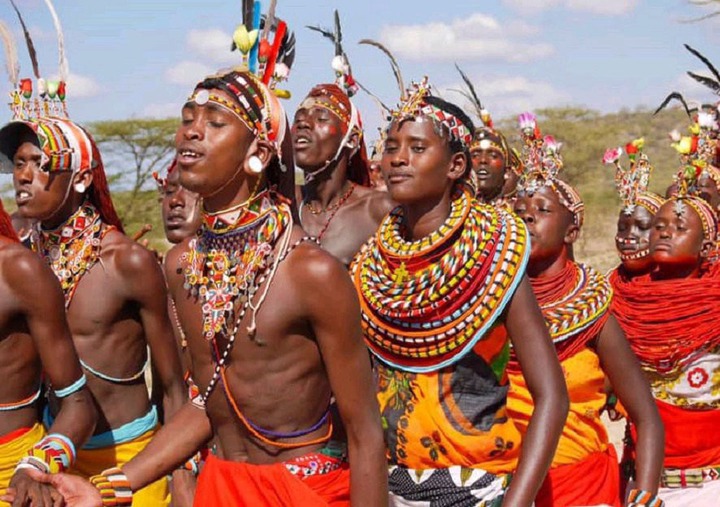

Africa is widely recognized as the second-largest continent in the world and one of the most culturally diverse. Covering approximately 30.3 million square kilometers and home to more than 1.2 billion people, the continent boasts extraordinary linguistic diversity.
Experts estimate that over 2,000 distinct languages are spoken across Africa’s 54 countries, reflecting centuries of migration, trade, culture, and history.
Among these thousands of languages, a number stand out due to their widespread usage and cultural influence. Below are nine of the most widely spoken languages in Africa, and where Zulu fits among them.
1. Swahili (Kiswahili)
Swahili, also known as Kiswahili, is one of Africa’s most influential languages. With over 150 million speakers (including second-language users), it serves as a lingua franca across East and Central Africa. It is widely spoken in countries such as Tanzania, Kenya, Uganda, Rwanda, Burundi, the Democratic Republic of Congo, and Mozambique.
Originally developed as a trade language along the East African coast, Swahili has maintained its relevance for centuries and remains central to commerce, education, and governance in the region.
2. Arabic
Arabic is one of the most widely spoken languages in North Africa. More than 100 million Africans speak Arabic, making it one of the continent’s dominant languages. It is the official language of countries such as Egypt, Algeria, Morocco, Libya, Tunisia, Sudan, Chad, Djibouti, Mauritania, and the Comoros.
North Africa is home to a significant portion of the global Arabic-speaking population.
3. French
Due to colonial history, French became widely established across West and Central Africa. Today, more than 90 million people in Africa speak French. It is an official language in 26 African countries, including Senegal, Côte d’Ivoire, Gabon, Guinea, Mali, Niger, and the Democratic Republic of Congo.
French remains important in government, education, diplomacy, and business.
4. Hausa
Hausa is one of the most important trade languages in West Africa, with over 50 million native speakers. It belongs to the Afro-Asiatic language family and is widely spoken in Nigeria and Niger, as well as in Ghana, Cameroon, Benin, Burkina Faso, and Togo.
Its economic significance in trade and commerce has helped expand its influence beyond native speakers.
5. Yoruba
Yoruba is spoken by about 30 million people in Nigeria, Benin, and Togo. It is one of Nigeria’s major languages and plays a vital role in literature, religion, music, and cultural identity.
6. Oromo
Oromo, a Cushitic language, is spoken by approximately 30 million people primarily in Ethiopia, as well as in Kenya and Somalia. The Oromo people are the largest ethnic group in Ethiopia, accounting for more than 40% of the country’s population.
7. Igbo
Igbo is spoken by about 24 million people, mainly in southeastern Nigeria, with communities also in Cameroon and Equatorial Guinea. It belongs to the Niger-Congo language family and has multiple dialects.
8. Amharic
Amharic is Ethiopia’s official language and the second most widely spoken Semitic language in Africa after Arabic. It has around 25 million native speakers. One of its unique features is its distinct writing system known as Ge’ez script.
9. Zulu
Zulu is one of South Africa’s 11 official languages and belongs to the Bantu/Nguni language family. It is spoken by approximately 10 million native speakers, with many more using it as a second language.
Zulu is well known for its distinctive click sounds, which were influenced by Khoisan languages. It ranks among the most widely spoken Bantu languages in Africa and plays a major cultural role in South Africa.
Final Thoughts
Africa’s linguistic richness is unmatched globally. From Swahili’s role as a regional trade language to Zulu’s cultural prominence in Southern Africa, these languages represent the continent’s diversity, heritage, and unity.
Understanding where Zulu stands among Africa’s widely spoken languages highlights not only its importance in South Africa but also its place within the broader African linguistic landscape.
